

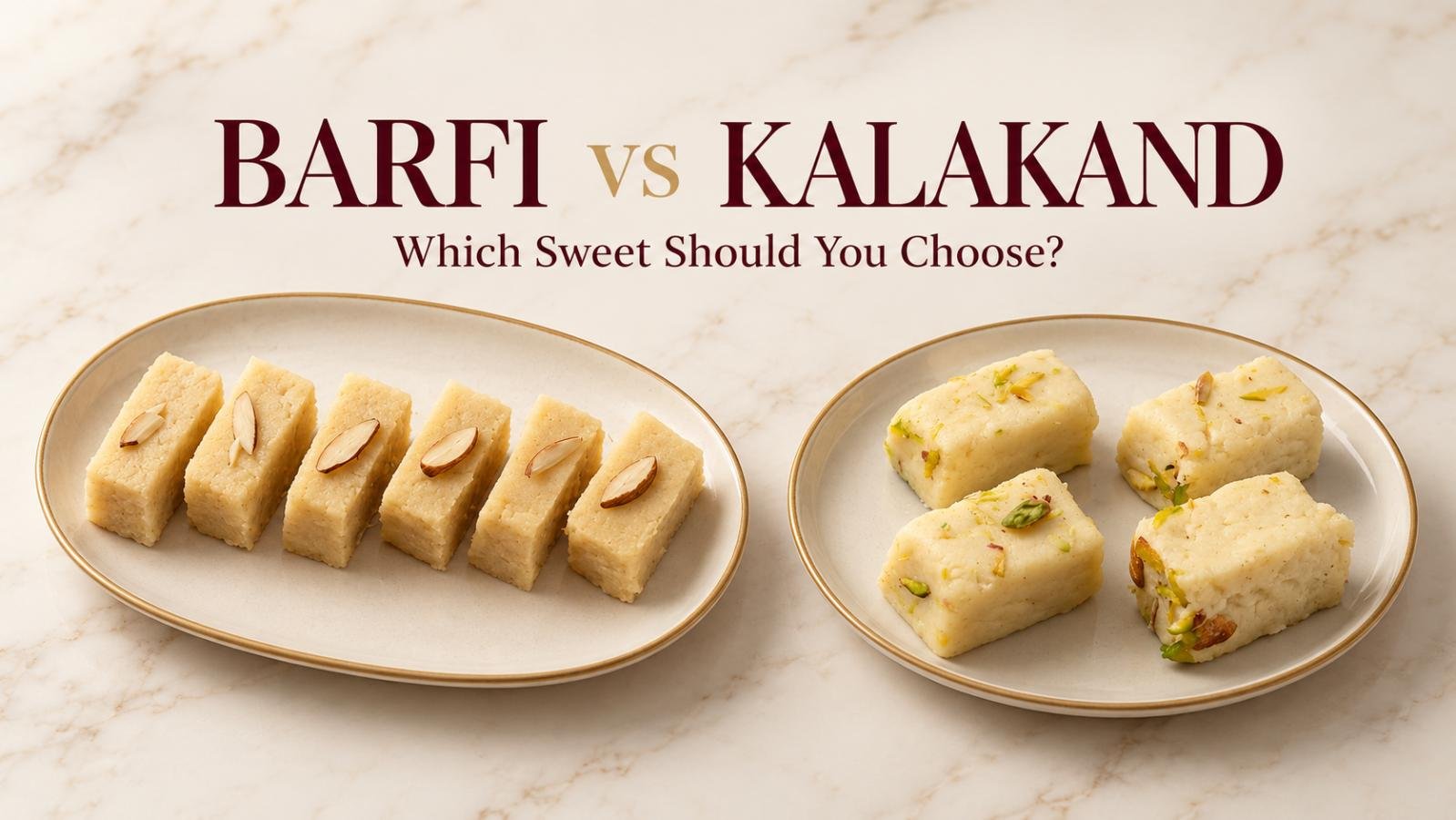
Barfi vs Kalakand: Which Sweet Should You Choose?
Two pieces of mithai can look similar in a gift box and still offer a different experience with the first bite. One feels smooth and compact; the other breaks into soft, moist grains. That difference is at the heart of the barfi vs kalakand choice, especially when you are buying for someone whose favourite sweets you do not yet know.
Both can bring a rich milk flavour to the table, and either can suit a celebration. The better choice depends on the texture you enjoy, how you plan to serve it and whether the sweets are for sharing now or giving as a gift.
This guide compares plain milk barfi with kalakand. Barfi comes in many varieties, so a nut-based kaju barfi or a wheat-based doda barfi would create a different comparison. Here, the focus stays on choosing between two familiar milk sweets.
The Quick Choice: Which One Will You Enjoy More?
Choose milk barfi if you prefer a smooth, compact sweet with a soft, fudge-like bite. Choose kalakand if you enjoy a moist, grainy texture and a delicate milk sweet. For gifting or serving guests, consider their preferences and the packing arrangements. Neither is automatically sweeter or better for every occasion.
The Main Differences at a Glance
The difference between barfi and kalakand is easiest to understand through their texture. Ingredients and preparation help explain it, but recipes vary between sweet shops.
| Feature | Plain milk barfi | Kalakand |
| Typical texture | Smoother and more compact | Grainier, moist and more delicate |
| Bite | Holds together as a soft, set piece | Often breaks into tender milk granules |
| Flavour | Concentrated milk sweetness, with any added flavourings | Rich milk character, with any added flavourings |
| Preparation | Commonly made with reduced milk solids and sugar | Methods develop or retain a granular milk structure |
| Shape | Often cut into squares or rectangles | Also commonly cut into squares or rectangles |
| Serving consideration | Convenient as a neatly portioned sweet | Benefits from support when lifting and plating |
| Best starting preference | A more even, smooth bite | A softer, textured mouthful |
These are typical differences, not a rule that barfi must be hard or kalakand must fall apart. Well-made versions of both can be soft and hold their shape.
What Each Sweet Is Made From
Milk barfi is commonly associated with khoya, also called mawa or khoa: milk reduced until much of its water has evaporated. The milk solids are cooked with sugar, then shaped and allowed to set. Other recipes use milk powder or condensed milk, so the exact method is not universal.
Kalakand gets its character from the grains within the milk mixture. Traditional methods can develop these grains while reducing and partially curdling milk. Other versions combine chenna or paneer with reduced or condensed milk.
The distinction matters because two sweets can contain similar basic ingredients while feeling quite different to eat. How the milk is treated and how far the mixture is cooked affect the finished result.
Cardamom, nuts and other flavourings may appear in either sweet. Almonds or pistachios on top do not, by themselves, tell you whether a piece is barfi or kalakand.
If ingredients matter to your purchase, ask about the particular product. A general description of traditional mithai cannot confirm a shop’s full recipe, nut content or preparation arrangements.
Texture: Look Beyond the Shape and Garnish
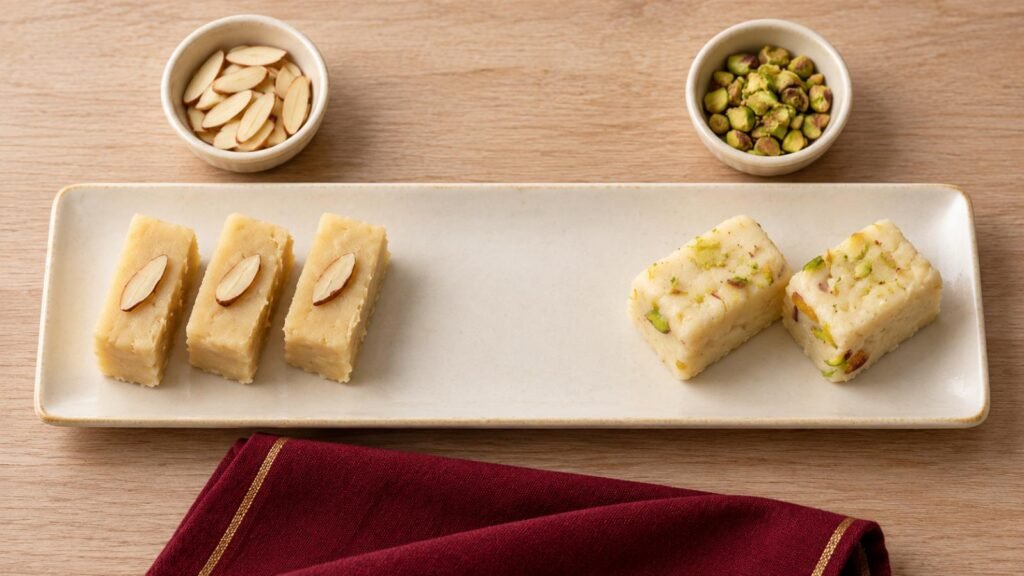
A photograph of two neatly cut squares may not reveal much. Look at the cut surface and how the piece holds together instead.
Milk barfi has a more even bite
Plain milk barfi generally has a closer, smoother structure. You may see fine milk grains, but the piece usually feels more uniform as you bite through it.
That makes it a sensible starting choice for someone who enjoys fudge-like sweets and prefers less variation in texture. Smooth does not mean sticky or rubbery, and a compact piece does not need to be hard.
Kalakand has a more noticeable grain
Kalakand usually shows small milk granules within a moist, soft body. The texture is part of its appeal: it breaks gently rather than giving the same even bite throughout.
If you enjoy a tender sweet with a little crumbliness, this may be the more appealing option. A small plate also makes it easier to enjoy any loose crumbs without rushing through the piece.
When buying either sweet, judge the actual batch rather than expecting every shop’s version to match a photograph. Thickness, preparation and serving temperature can all influence how firm a piece feels.
Taste: Milk Flavour, Garnish and Sweetness
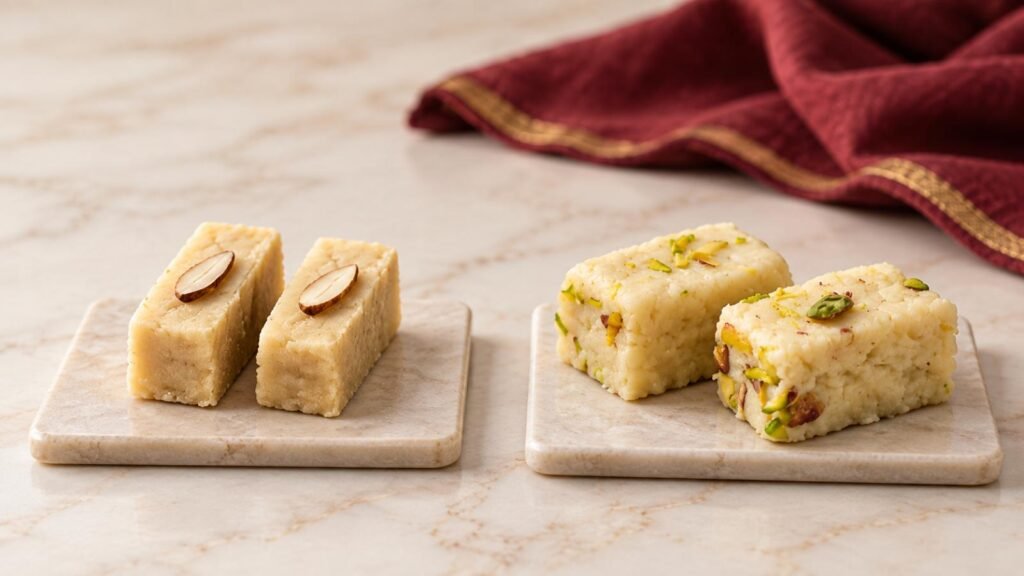
Both sweets belong comfortably on a milk-mithai platter. The taste difference can be subtler than the difference in texture, particularly when both have similar flavourings.
Milk barfi often delivers a concentrated, creamy milk taste in a compact bite. Kalakand offers its milk flavour through a softer, more granular mouthful. Neither description means one must contain more milk or taste richer in every recipe.
Is one always sweeter?
No. Sugar quantity, flavourings and portion size vary. A small piece of one product may feel less sweet than a large piece of the other, even before differences in the recipe are considered.
Texture also affects the eating experience. A moist sweet may feel lighter to one person, while another may find its creamy character particularly rich. That impression does not establish its sugar content.
If you prefer restrained sweetness, ask about the shop’s actual versions. Where tasting is available, compare similarly sized pieces served at a similar temperature.
Let the garnish influence your choice
A generous almond topping adds a different bite from a fine pistachio sprinkle. Cardamom can also change which sweet you prefer. Someone who loves the base milk flavour may want a simpler finish; someone who enjoys nuts may favour the more generously garnished piece.
Choose from the complete sweet in front of you, rather than the name alone.
Match the Sweet to the Occasion
The same person might choose barfi for an afternoon visit and kalakand for dessert after dinner. The setting changes how the sweet will be served and enjoyed.

For tea with family or friends
Milk barfi is a practical option when you want neatly portioned pieces on a shared plate. Its more compact structure can make it straightforward to lift and pass around.
Kalakand can work just as well if your guests prefer its grainy texture. Serve it with small plates and a suitable serving utensil, particularly when the pieces are delicate.
For a short visit, there is no need to build a large assortment around either sweet. Choose the one your guests enjoy and portion it to suit whatever else is on the table.
For an after-dinner dessert
Kalakand is a good option for a seated dessert because each piece can be supported on a plate. Guests can take their time with its soft texture, and any crumbs remain easy to manage.
Milk barfi suits the same occasion when you want a compact piece alongside other desserts. Consider the whole plate: a rich meal followed by cake and mithai may call for a smaller portion of each.
The decision is about the experience you want to serve. Kalakand is not inherently too rich for dinner, and barfi is not restricted to tea time.
For Eid, weddings and family celebrations
Both sweets can suit festive occasions. Start with the preferences of the people attending and how dessert service will work.
For a seated meal, either can be plated individually. At a gathering where trays move between groups, consider how the pieces will be lifted and whether the chosen packaging or serving cups provide enough support.
If some guests enjoy smooth milk sweets and others prefer a grainier bite, including both can add a useful contrast without introducing completely different flavours.
For a gift or a visit to someone’s home
When choosing barfi or kalakand for gifting, the recipient’s taste is the strongest guide. Familiarity is valuable: a favourite sweet is often more thoughtful than choosing something simply because it looks more elaborate.
Timing matters too. Will the recipient open the box soon, or will it be carried between several visits? Ask the shop about suitable packing and refrigeration before deciding.
Barfi’s firmer structure may help it stay neatly arranged, but that does not make it suitable for unlimited time outside refrigeration. Kalakand can also be gifted successfully when its softer pieces are protected and handled as advised.
When a Box of Both Makes Sense
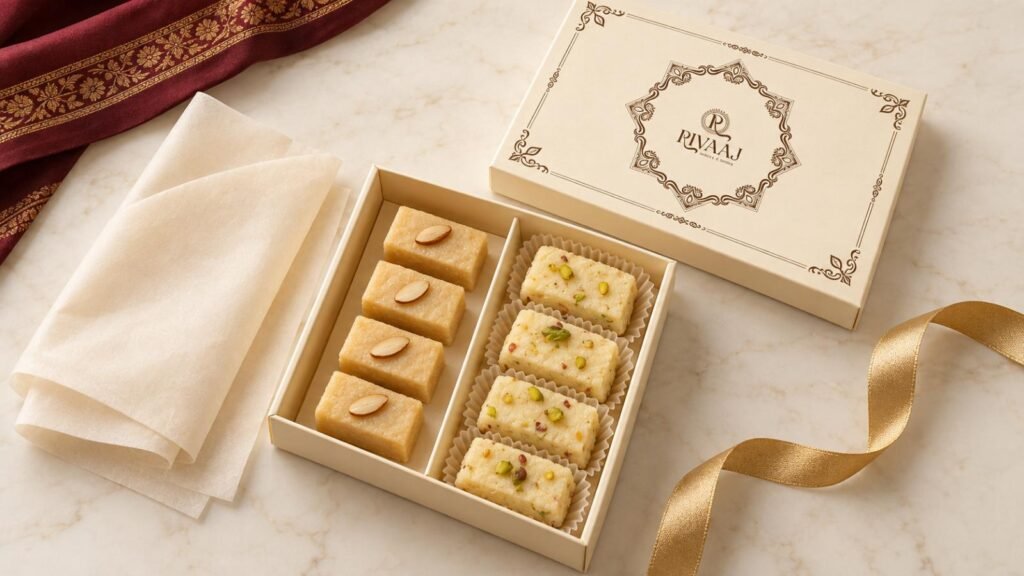
A mixed selection works well when you know everyone enjoys milk sweets but their texture preferences differ. You get a meaningful contrast while keeping the overall flavour profile familiar.
Choose the balance according to the recipient. If they usually reach for smooth sweets, make barfi the larger share and include kalakand for variety. Reverse that balance for someone who enjoys soft, grainy mithai.
If you do not know their preference, a small selection of each offers a way to discover it. You do not need to order a large box simply to include two varieties.
Ask whether the sweets can be packed in separate sections or trays. The aim is to support the delicate pieces and make each variety easy to remove. Avoid placing heavier pieces directly on top of softer kalakand.
For a shared platter, arrange them in distinct groups. Guests can see what they are choosing, and the different textures remain easy to identify.
Freshness, Packing and Serving Temperature
A sweet that travels neatly still needs the right storage. Firmness and shelf life are different considerations, and the name of a mithai does not provide a complete storage instruction.
RIVAAJ’s product guidance calls for refrigeration for both its milk barfi and kalakand. Follow the instructions supplied with your order, including when to consume it and how to handle it before serving.
For a gathering, plan collection or delivery around the time you can receive and refrigerate the sweets. If you are taking them as a gift, let the recipient know about the storage guidance.
Keep pieces protected in suitable containers so they are not crushed or left exposed. When setting out a platter, bring out what you intend to serve and handle the remaining sweets according to the supplier’s advice.
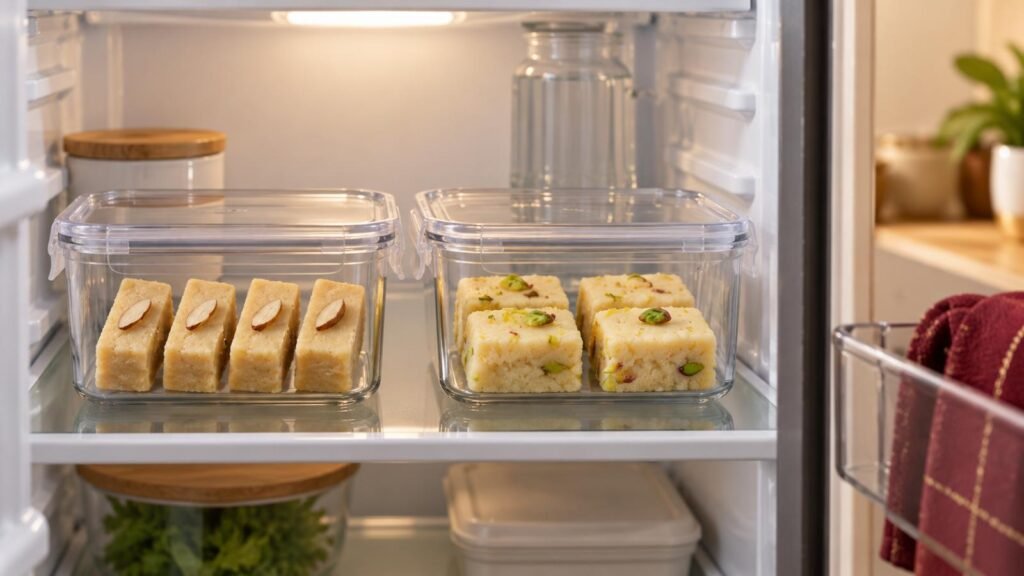
Temperature can change firmness and the way the texture feels. RIVAAJ suggests chilled barfi and slightly chilled kalakand. You do not need to warm either sweet to make the comparison fair; simply follow the product’s serving guidance.
Choosing Barfi or Kalakand in Riyadh
For customers choosing Pakistani sweets in Riyadh, the useful question is how the shop’s actual products compare. General descriptions help narrow the choice, but the product details should guide the final order.
RIVAAJ’s Barfi is described as smooth and soft, with a creamy milk taste and mild sweetness. It is a fitting starting point if an even texture is your main preference.
RIVAAJ’s Kalakand is described as a soft, grainy milk sweet with mild sweetness. Consider it when you want a more textured bite or a milk-based dessert to serve after a meal.
Before ordering, explain whether the sweets are for tea, a dinner, a family celebration or a gift. Then confirm:
- The current selection and available order quantities.
- Whether both sweets can be included in your preferred packing.
- Storage and serving instructions for the actual order.
- Collection or delivery arrangements for your date and address.
If appearance matters for gifting, use the product photographs as a reference and ask about the current presentation. Garnishes and handmade portions can vary, so a clear order brief helps the team understand what you want.
Frequently Asked Questions
Barfi and burfi are alternative English spellings of the same name. The more useful distinction is the variety: milk barfi, besan barfi and nut-based versions can differ considerably. Check the product description rather than using the spelling to predict its ingredients or texture.
The names sometimes overlap. Some recipes call kalakand an Indian milk cake, while some sweet shops use milk cake for a separate, more caramelised product. If you want a particular texture, ask about the sweet itself instead of assuming the two names always describe identical items.
Kalakand can be delicate and lightly crumbly, but it should generally have enough structure to be portioned and served. Its grainy texture does not mean it must collapse when lifted. Use a serving utensil that supports the base, especially with larger pieces.
Firmness alone cannot tell you how long a sweet will keep. Ingredients, preparation, packaging and storage all matter. Follow the shop’s guidance for the actual product. In particular, do not treat milk barfi as a room-temperature sweet simply because it holds its shape better than kalakand.
Start with the texture you already enjoy in desserts. Milk barfi is a reasonable choice if you like a smooth, fudge-like bite. Kalakand may appeal more if you enjoy soft, moist desserts with some grain. Trying a small portion of each is useful when you are unsure.
Colour is not a reliable guide. Milk sweets can vary with ingredients, flavourings and preparation, and similar garnishes can appear on both. A labelled product display, the cut surface and the shop’s description provide a better basis for identifying what you are buying.
There is no reliable winner based only on the names. Recipes and piece sizes differ, so a fair comparison needs nutrition information for equal weights of the specific products. A lighter-feeling texture does not automatically mean fewer calories or less sugar.
For the final barfi vs kalakand decision, choose the texture you will enjoy and the presentation that suits your occasion. Go with smooth milk barfi for a compact, even bite, grainy kalakand for a softer experience, or a little of both when the table has room for different preferences.